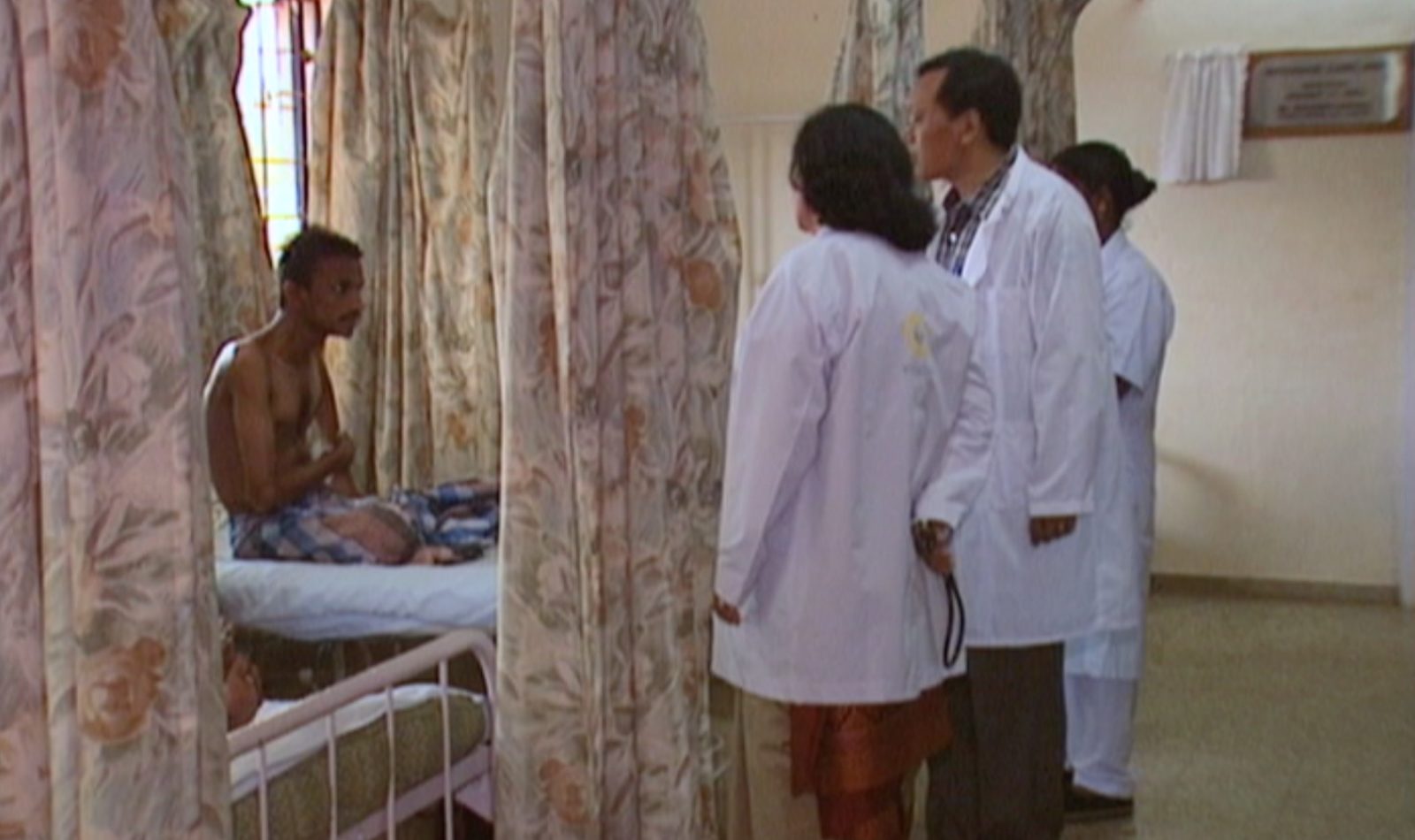
FRED DE SAM LAZARO: The AIDS epidemic did begin in the red-light district of Bombay or Mumbai, India's commercial capital. And it garnered lots of public attention thanks to Dr. Gilada, seen here in a 1994 NewsHour profile delivering a safe-sex sermon. He says such measures have helped stabilize infection rates in urban areas, but they are growing in areas of low prevalence, including the vast rural hinterland. DR. ISHWAR GILADA: That is a dangerous sign, because over 70 percent of the country's population is rural population. There's a lot of migration between urban and rural. Most of the people in Bombay have access to information, access to tools like condoms, access to going to doctors for STD check-ups and also get HIV test done, which is not so in rural areas. FRED DE SAM LAZARO: And awareness about AIDS is frequently sketchy at best. The disease is also growing among women. MEENAKSHI DATTA GHOSH: Eighty percent of the women who come to us, who are infected, have a single partner, and that's their husband. FRED DE SAM LAZARO: Bhagya Lakshmi is 38, HIV-Positive and a widow. She's raising two young girls and supporting her elderly mother. Her husband died four years ago of AIDS, which he contracted from a sex worker. BHAGYA LAKSHMI ( Translated ): Soon after our marriage, we had a lot of problems. He stopped working. He was drinking. He used to hit me. But the one thing I'm really happy about is when he told me the truth, when he took the HIV test, that has helped me prepare to deal with it. FRED DE SAM LAZARO: The truth about sexual mores that many men visit sex workers is rarely discussed not even in India's influential movie industry. It's made it hard to craft media campaigns. This television spot was commissioned by the Charitable Trust of the BBC World Service. A father must confront the reality of his son's sex life, but the commercial was quickly scrapped. The health ministry deemed it, "too condom-centric." Such actions reflect widespread denial and fear that access to condoms promotes promiscuity, says Nafisa Ali. She runs an AIDS care center in New Delhi. A former movie star, Ali is one of few who have gotten publicly involved with AIDS issues. NAFISA ALI: In the land of the Kama Sutra, the land of a billion, a land where every man can do what he wants, it's very macho to go and have a relationship out of your family-based relationships. Don't the parents think that this is a problem for young people, too? I work in the red-light area. I work and I have seen school kids there. FRED DE SAM LAZARO: For her part, the government's Ghosh admits this country has been slow to tackle AIDS, but she insists that's changed, pointing to the Vijay series-- one that gets the message across effectively without grating on community sensibilities about condoms. MEENAKSHI DATTA GHOSH: Subtle messages on HIV/AIDS and the dangers of high-risk behavior and the need to practice safe, you know, social and sexual behavior is being talked about at prime time. So it is definitely beginning to change, and, you know, in a meaningful way, not just, you know, a flash-in-the-pan kind of change. |