Mali, us
Subsidy Struggle
How U.S. cotton subsidies impact African farmers
September 3, 2003
- JIM LEHRER:Now the fight over farm subsidies. Tomorrow, world trade ministers will meet in Cancun, Mexico, to consider charges that rich- nation subsidies are hurting farmers in developing countries. Fred de Sam Lazaro of Twin Cities Public Television reports on what’s at stake.
- FRED DE SAM LAZARO:The day of cotton’s dominance may be long past in the American South, yet the 25,000 or so U.S. cotton growers continue to earn profits, even though world cotton prices are at historic lows. The reason is federal subsidies, which guarantee farmers a minimum price. So growers like John Lindamood, who plants 5,000 acres in Tennessee, can sell cotton below his cost of producing it.
- JOHN LINDAMOOD:In years of historically low prices, which is where we are currently, and have been for the last couple years– we’re producing for prices that my father received when I was in grade school– these government supports are essential to us staying in business.
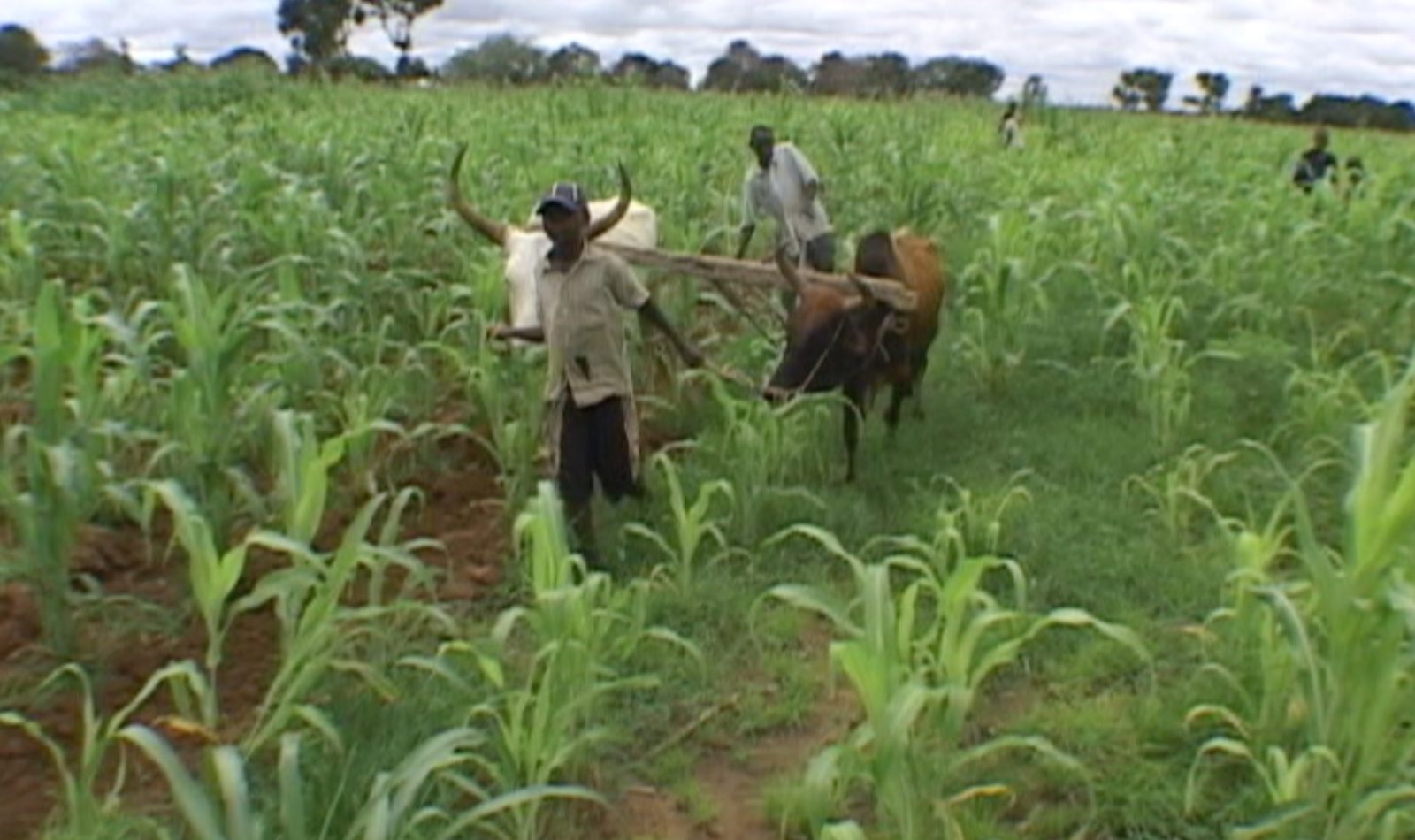
- FRED DE SAM LAZARO:But critics, notably leaders of some West African nations say those U.S. government supports, subsidies, are depressing world cotton prices and devastating African farmers and economies, which depend heavily, in some cases almost entirely, on exports of cotton.One of the four countries bringing a complaint against U.S. subsidies at the World Trade Organization is Mali. This former French colony, with a per capita income of just $270 a year, is one of the world’s ten poorest nations. Most of its 12 million citizens live near the Niger River. And most, like Hamidou Coulibaly, are subsistence farmers. They grow corn and millet, mainly for their own needs, and cotton for income.
- HAMIDOU COULIBALY:(Translated): We are growing cotton, but we have some difficulties. Our difficulties are that our cotton doesn’t get a good price. Also, that fertilizers and insecticides are expensive.
- FRED DE SAM LAZARO:Last year, after covering all costs and expenses, Coulibaly’s seven-acre cotton crop brought in just $500.
- HAMIDOU COULIBALY:What I get is not enough. We have to pay taxes, and I have to pay for clothes and medicine. I have children who go to school. I have to pay for their clothes and their school supplies.
- FRED DE SAM LAZARO:Coulibaly has had to resort to borrowing money to support his extended family of 40 members. Many neighbors are even worse off. Kalifa Coulibaly, who’s not related, has had to sell some of his cattle used to plow his fields. On this day, he borrowed the equivalent of $30 to buy medicine. That’s more than 10 percent of his earnings last year.
- KALIFA COULIBALY (Translated):I just borrowed 15,000 C.F.A’s. They’ll take it our of my cotton income. All of my family has been sick, and I took this money to pay for medicine.
- FRED DE SAM LAZARO:Mali’s president, Amadou Toure, has won praise and aid from Washington for promoting democratic and free market policies. But he complains Washington itself is violating free market principles by subsidizing American farmers.
- AMADOU TOUMANI TOURE, President, Mali ( Translated ):We studied the impact of these subsidies and found that if there were not subsidies, we would increase the income of our producers by more than 30 percent. The losses we’re sustaining are more than the aid we receive from the United States, and we find this unjust, because the population who produce cotton are powerless rural people.
- FRED DE SAM LAZARO:The U.S. Ambassador here, Vicki Huddleston, says farm subsidies are a fact of life.VICKI HUDDLESTON, U.S. Ambassador to Mali: Obviously in the United States, as a democracy, we have cotton farmers. Cotton farmers see the price of cotton going down. They can’t produce at that price, so they go to their representatives and say, “we need to be subsidized so we can continue to produce cotton.” The problem in developing countries like Mali is, the government can’t afford to subsidize cotton.
- FRED DE SAM LAZARO:Moreover, she said, subsidies and higher prices alone won’t solve Mali’s problems, which go much deeper. To begin, there’s just one cotton company in Mali, called CMDT, a monopoly jointly owned by the government and a large French company. CMDT dominates farmers’ lives. It’s the only place to get seeds, fertilizers, insecticides, or a loan. CMDT is also the only place farmers can sell their cotton.
- HAMIDOU COULIBALY:( Translated ): The problem we have is, even if we grow good quality cotton, CMDT says “your cotton is second or third class.” They make the rules: First, second, third. They tell us the price. We don’t know the price. So if we don’t know something, we will trust whatever they say, even if we don’t believe them.
- FRED DE SAM LAZARO:CMDT Officials insist they do their best for Mali’s cotton growers. But Ambassador Huddleston says an even bigger problem for both is that almost all of Mali’s cotton is exported as raw material.
- VICKI HUDDLESTON:Mali produces cotton, but they don’t produce any t-shirts. They really need to diversify. They need to be making thread, they need to be making T-shirts; they need to be making trousers. This then will really give Mali the opportunity to develop.
- FRED DE SAM LAZARO:President Toure says he’s committed to changing the cotton business and building new industries to develop raw materials– not just cotton, but gold and livestock. But these are long-term prospects that require money and know-how Mali does not have. For now, he says cotton remains key to building a stable democratic nation.
- AMADOU TOUMANI TOURE (Translated):The best way to prevent conflict and terrorism is to struggle against poverty. Cotton is a critical strategic product in the struggle against poverty. Cotton for us builds hospitals and schools. It buys medicines, roads– therefore, social development. We’re asking simply that our cotton get the same chance to be sold as American cotton, European, or Chinese.
- FRED DE SAM LAZARO:Besides the removal of cotton subsidies, Mali will ask for compensation in the WTO for losses the president says they have caused.
- AMADOU TOUMANI TOURE (Translated):We have a proverb here which says “the hand that gives is always higher than the one that receives.” We’re only asking for our rights.
- FRED DE SAM LAZARO:For their part, the group representing U.S. cotton producers says a myriad of world economic factors, not subsidies, affect world cotton prices. President Mark Lange says subsidies have been in place in times of low and high prices.MARK LANGE, National Cotton Council of America: The United States has had a 60-year history of Congress saying to the citizens of this country that it will engender programs that provide safe, affordable, and abundant food and fiber supplies to the U.S. citizens. Is that distorting world markets? Not really. Is that harming foreign producers? I don’t believe so.
- FRED DE SAM LAZARO:Lange says he’s not opposed to negotiating new trade agreements, but says these must happen with other major producers whose subsidies are even greater.
- MARK LANGE:In fact, the U.S. spends less on a per-crop or per-acre basis than several other major agricultural exporters in the world, in particular the EU and Canada. And so, when we think about these things, I think the appropriate place to discuss should there be further disciplines on agricultural subsidies is in the WTO. We’ve said that, and we continue to say that, that the U.S. would be foolish to, in a sense, unilaterally disarm.
- FRED DE SAM LAZARO:In August, U.S. and EU officials agreed to work together to reduce agriculture subsidies, which throughout the developed world total about $1 billion per day. Many experts called it at best a small first step in the difficult task of reaching an agreement acceptable both to poor farmers in the third world and their politically more powerful counterparts in the West and Japan.
The Cost of Cotton
The issue of cotton subsidies has been a hot topic at the WHO for years. Complaints raised by a number of African countries claim that the US subsidies are depressing global cotton prices and costing farmers in these developing nations millions of dollars.